
Freelance Jobs for ADHD: 6 Paths That Actually Fit How Your Brain Works
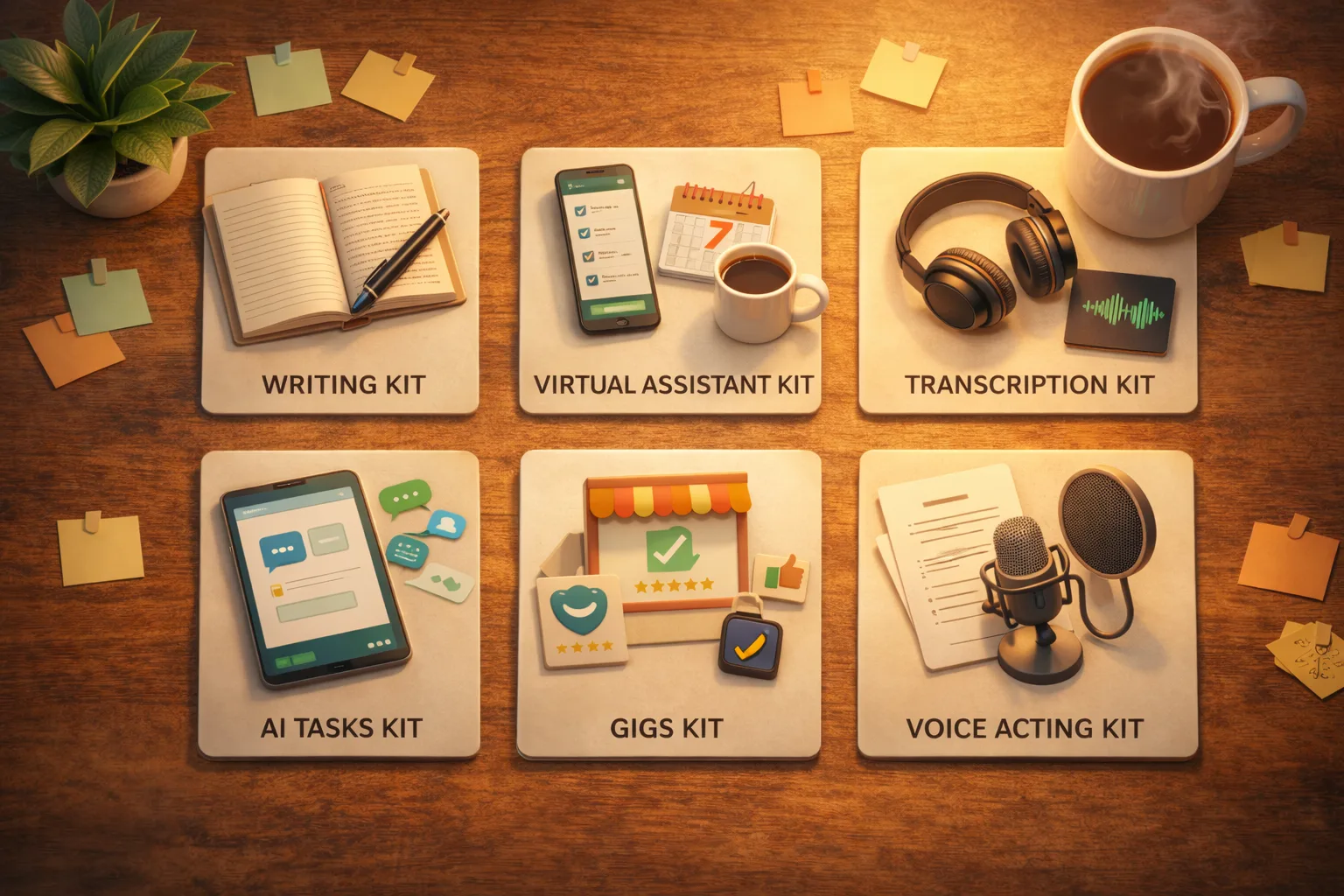
TL;DR: Freelancing can fit ADHD well, if you pick paths with low admin, fast payouts, and async deadlines. Not all freelance work is equal. Below are 6 paths that match how ADHD brains actually function, plus the ones to skip and a three-step plan to start this week.
Why “Just Go Freelance” Often Backfires for ADHD
On paper, freelancing sounds perfect for an ADHD brain. No boss. No commute. Work when your energy is high. Pick projects you actually care about. Skip the meetings.
In reality, a lot of freelance work hides a second job underneath: finding clients, writing proposals, chasing invoices, managing your own taxes, and keeping your calendar coherent. That second job is mostly executive function. Which is the exact thing ADHD makes harder.
The freelance paths that destroy ADHD brains are the ones with high admin overhead and slow, inconsistent pay. The paths that work are the ones where you can show up, do the task, and get paid, without 12 hours of pre-work each week.
What Makes a Freelance Job ADHD-Friendly
Before the list, here's the filter. A freelance path fits ADHD when most of these are true:
- Low admin overhead. You spend most of your time doing the work, not selling it.
- Fast payout. You get paid in days or a week, not 60-day net terms.
- Async by default. No live calls required. You work when your brain shows up.
- Project-based, not hourly. Hourly tracking is its own ADHD nightmare.
- Discrete tasks with clear endpoints. You can finish something today and feel done.
- Low startup cost. No expensive software, certifications, or upfront investment.
If a freelance path fails 3+ of those filters, it's probably going to chew you up. That's not a personal failure. It's a fit problem.
6 Freelance Paths That Actually Fit ADHD
Each of these is something real ADHD adults are doing today. Each one has tradeoffs. I'm not going to pretend any of them are passive income.
1. Freelance Writing (Blog Posts & Copywriting)
What it is:Writing articles, blog posts, product descriptions, or short marketing copy for businesses that don't have an in-house writer.
Why it fits ADHD:Hyperfocus is a real asset here. You can knock out a 1,500-word post in one good afternoon, then take two days off. Pay is per piece, so a slow day doesn't cost you. Most communication is async over email or Slack.
The catch:Rates start low. The first 3–6 months you're likely earning $30–$60 per article on content marketplaces. Once you have samples and a niche (B2B SaaS, finance, health, etc.) rates climb fast. $150 to $500+ per piece is normal.
How to start: Pick one topic you already know something about. Write three sample articles on your own. Pitch small businesses or sign up to a marketplace like Contently, ClearVoice, or even Fiverr to get your first paid bylines.
2. Niche Virtual Assistant Work
What it is: Doing recurring tasks for one or two clients: inbox triage, scheduling, data entry, light research, booking travel, formatting documents.
Why it fits ADHD: The trick is going niche. A generalist VA juggling five clients with different systems is an ADHD nightmare. A specialist VA for one industry (real estate agents, podcasters, Etsy sellers) does the same handful of tasks repeatedly, which means low context-switching and less decision fatigue.
The catch: You need to be reliable on the things your client depends on. If inbox triage is your job and you go dark for two days, you lose the client. Pair this with a calendar reminder system you actually use.
How to start:Pick one industry you understand. Write a one-page service list. Reach out to 10 small business owners in that niche on LinkedIn or directly through their websites. Charge $20–$35/hour to start, raise it within 90 days.
3. Transcription & Captioning
What it is: Listening to audio or video and typing what you hear. Sometimes cleaning up auto-generated captions. Sometimes timestamping for accessibility.
Why it fits ADHD:It's the ideal “low-energy work” option. You don't need to think hard or be creative. You can do it with a podcast brain (half-engaged, half on autopilot) and still get paid. Discrete files with clear deadlines. No client meetings. Pay per audio minute or per file.
The catch:Pay is modest. Entry-level rates run roughly $0.30–$1.10 per audio minute, which works out to $8–$25/hour depending on your speed and the difficulty of the audio. Specialized work (legal, medical) pays significantly more but requires training.
How to start: Apply to Rev, GoTranscript, Scribie, or TranscribeMe. Most require a short test. Once accepted you can pick up files whenever you want, which is the ADHD win.
4. AI Training & Data Tasks
What it is: Rating AI responses, writing example prompts, comparing outputs, labeling images, fact-checking. Companies like Outlier, DataAnnotation, and Scale AI pay people to make their models smarter.
Why it fits ADHD:Bite-sized tasks. Asynchronous. Pay is hourly but you choose when you log in. The work is novel enough that boredom doesn't crater your focus the way generic data entry does. Pay can be surprisingly good for the qualification bar: $15–$40+/hour for general tasks, more for STEM or coding domains.
The catch:Work availability is inconsistent. You might have 20 hours available one week and zero the next. It's great as a supplement, harder as a sole income source.
How to start:Sign up for one or two platforms. Take the qualification tests. Don't lock yourself into one. The platforms that have work this month won't necessarily have work next month.
5. Small Project Gigs (Fiverr / Upwork)
What it is: Listing a specific micro-service (logo cleanup, podcast audio editing, resume formatting, Notion template setup, Canva design) and letting buyers come to you.
Why it fits ADHD:One skill, repeated. You don't pitch. Clients find you. Each gig has a defined scope and deliverable. You get a clean dopamine hit at completion. Payment goes through the platform, so there's no chasing invoices.
The catch:The first 90 days are slow. You need 5–10 reviews before the algorithm surfaces your gig. Price low at first, then raise rates as your review count builds. Avoid scope creep by being explicit about what's included and what costs extra.
How to start:Pick one specific skill. Look at the top 5 sellers offering the same thing. Make your gig more specific than theirs (e.g., not “logo design” but “modern minimalist logo for coffee shops”). Niche wins.
6. Voice Acting & Narration
What it is: Reading scripts for ads, e-learning courses, audiobooks, explainer videos, IVR phone systems, or YouTube voiceovers.
Why it fits ADHD:If you have a clear voice and a quiet room, this is deeply project-based. You record the file, deliver it, get paid. No meetings. Hyperfocus sessions work in your favor. You can knock out a 2,000-word script in an afternoon. Once you have a few clients, you can earn $50–$300+ per short piece.
The catch:You need a quiet recording space and a decent USB mic ($80–$150). Auditions are unpaid and the rejection rate is high at first. Treat the first 60 days as skill-building, not income.
How to start:Record 3–4 sample reads in different styles. Sign up for Voices.com, Voice123, or Bodalgo. Audition daily for two weeks before judging results.
Freelance Paths to Be Careful With
These can work for some ADHD brains, but they come with extra friction. Go in with eyes open.
- Web design and development. Great creative fit, but client revisions and scope creep can be brutal. Charge fixed-price projects, never hourly.
- Bookkeeping and accounting. Stable income, but high attention-to-detail demands and recurring monthly deadlines. ADHD-friendly only if you build airtight systems.
- Long-form video editing. Can be hyperfocus-friendly, but file management and revision cycles will eat you alive without templates.
- Coaching and consulting. Live calls, prep work, follow-ups. Lots of context-switching. Better as a Phase 2 move once you have an established niche.
How to Actually Start This Week
Most freelance advice tells you to spend three months building a portfolio, a personal brand, a niche, an email list, and a content strategy before you earn a dollar. For an ADHD brain, that's a recipe for never starting.
The 3-step ADHD freelance start: Pick one path. Apply or list one gig. Take the first paid job, even if it pays badly. Momentum beats perfect.
Day 1: Pick the path from above that feels least exhausting to think about. Not the most lucrative. The one your brain doesn't flinch from.
Day 2: Sign up for the relevant platform OR write the first pitch / sample. Limit this to 90 minutes. Done is better than perfect.
Day 3–7: Apply, audition, or list daily. One per day. Ten total. Then wait for the first yes.
The goal of week one is not to earn rent. It's to break the inertia. The first $50 is worth more than a perfectly-crafted brand strategy you'll never finish.
Before You Commit: Gut-Check the Path
If you're looking at a specific freelance platform, gig type, or job listing and you're not sure if it's legit or worth your energy, run it through our free ADHD Energy Checker. Paste the platform name or the job description and you'll get a plain-English breakdown of effort, red flags, payout reality, and whether it tends to fit ADHD brains.
It won't make the decision for you, but it will save you from spending three weeks on a platform that pays in points or only releases payouts at $100 thresholds.
Frequently Asked Questions
Is freelancing actually realistic with ADHD?
Yes, but the path matters more than the discipline. Pick freelance work with low admin and fast payouts and you remove most of the friction that breaks ADHD brains. Pick work that requires constant client management and rigid deadlines and you'll burn out.
How much can I realistically earn freelancing with ADHD?
First 90 days: $0–$500/month while you find your footing. Months 4–12: $500–$2,500/month part-time, depending on path and effort. Year two and beyond: $2,000–$8,000+/month if you specialize and raise rates. These are honest ranges, not screenshots of someone's best month.
Do I need to register a business or LLC to start freelancing?
Not on day one. In the US you can start as a sole proprietor and report income on your personal tax return. Form an LLC later if it makes sense (liability protection, tax treatment, etc.). Don't let paperwork block you from starting.
What if I can't hold one client for very long?
That's common with ADHD. Novelty drives engagement. Pick paths where short engagements are normal: writing per article, gig-based design work, transcription, voiceover. Avoid retainer-heavy paths where you're expected to stay long-term.
What if I've tried freelancing before and it didn't stick?
The path probably wasn't the fit, not you. If you tried general VA work and burned out, try transcription or AI tasks. If writing felt like pulling teeth, try voiceover or microtasks. ADHD-friendly work is real, but the specific match matters.
Want a curated shortlist that's already vetted? 925 ADHD lists 70+ ADHD-friendly ways to earn online: tagged by energy, effort, and payout speed, with the scams already filtered out. One-time $9.25, lifetime updates.
If this article made you feel seen...
That's exactly why 925 ADHD exists.
70+ vetted ways to earn online, tagged by energy level, effort, and payout speed. Built for brains like yours.
Small systems. Low friction. Built for real life.
30-Day Money-Back Guarantee
Not a job placement service. No income guarantees.
Free Guide
See 5 examples of what's inside.
Get 5 ADHD-friendly side hustles from the full list — free, instant access. No spam.
Continue Reading

Can't Work a 9 to 5 With ADHD? You're Not Broken (Here's Why)
If you've searched "can't work a 9 to 5 with ADHD," you're not lazy. Many ADHD brains struggle with rigid schedules. You need a better fit, not more discipline.

What Is Ring of Fire ADHD? Symptoms, Traits, and What Helps
Ring of Fire ADHD is a descriptive term for an ADHD pattern that feels like overstimulation, emotional intensity, and racing thoughts. Here is what helps.
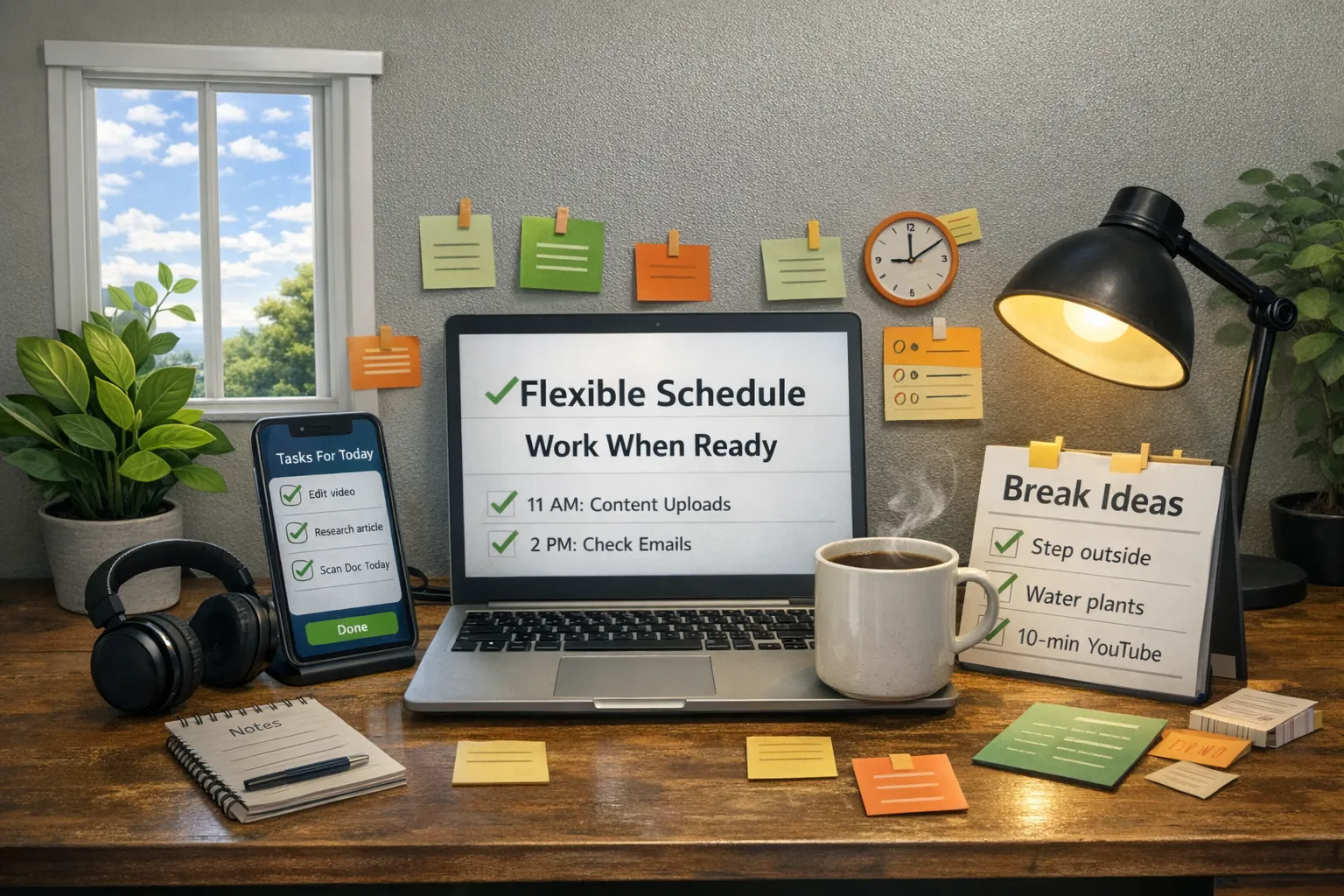
How to Work From Home With ADHD (Without Burning Out)
To work from home with ADHD without burning out, build around energy, reduce decisions, and choose work that is flexible by design.